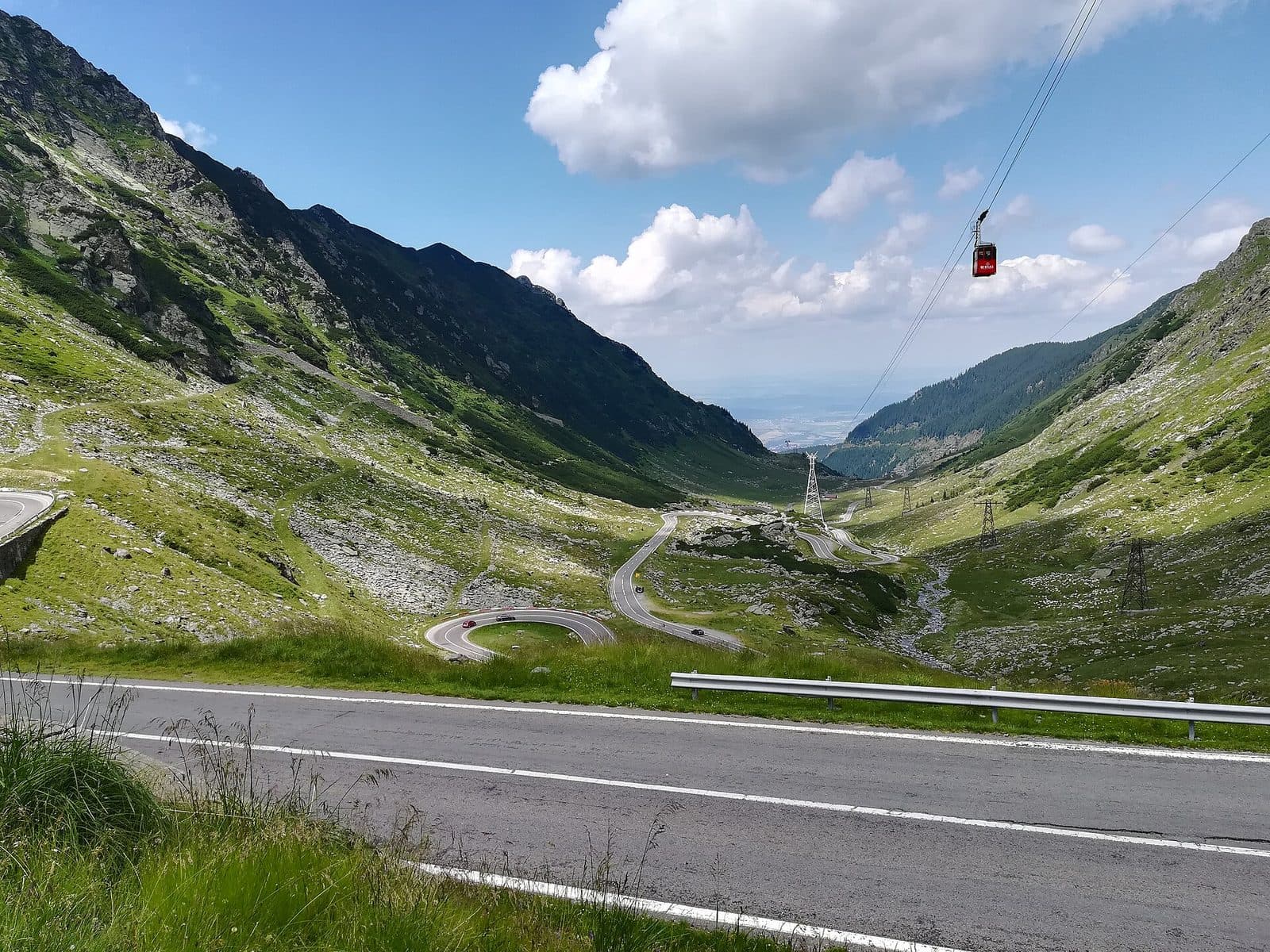
The Road Ceaușescu Carved Out of Fear
A dictator's paranoia, six million kilos of dynamite, and the serpentine asphalt that Top Gear crowned the best driving road on earth.
In August 1968, Soviet tanks rolled into Czechoslovakia to crush the Prague Spring. Watching from Bucharest, Nicolae Ceaușescu grew convinced that Romania could be next. The country's existing mountain passes followed river valleys that an invading army could easily seal off, so the dictator ordered something audacious: a paved military highway flung straight over the spine of the Făgăraș Mountains, the highest range in the Southern Carpathians. The result was the Transfăgărășan, known on maps by the unromantic code DN7C.
Construction ran from 1970 to 1974, mostly by army conscripts working at over 2,000 metres in brutal alpine weather. They blasted through the rock with roughly six million kilograms of dynamite, much of it handled by junior soldiers with no real training in demolition. Official records admit 40 deaths; veterans who built it have always insisted the true number ran into the hundreds. The road was opened on 20 September 1974, though crews kept paving the surface until 1980. It climbs to 2,042 metres at its highest point, threading five tunnels and more viaducts than any other road in the country.
Near the summit lies Bâlea, a glacial lake cupped in bare rock, reached through the Bâlea Tunnel, at 884 metres the longest road tunnel in Romania. From here the asphalt unspools downward in a frenzy of hairpins that, from above, looks less like engineering than calligraphy. For decades it was a Cold War curiosity. Then, in 2009, Jeremy Clarkson drove it for Top Gear and declared it the best road in the world, beating the Stelvio Pass that the show had previously crowned. Overnight a Ceaușescu vanity project became a global pilgrimage for drivers and motorcyclists. Because of snow, the full pass is typically only open from roughly July through October.
The southern descent runs past Lake Vidraru, held back by a 166-metre arch dam that was among the tallest in Europe when it was finished in 1965. And just below that, perched on a crag above the Argeș valley, stand the ruins of Poenari Castle, the genuine fortress of Vlad the Impaler, the warlord who inspired Bram Stoker's Dracula. Forget the tour-bus version at Bran Castle: Poenari is the real thing, and you earn it by climbing 1,480 steps up the ridge.
Poenari carries one of the darkest legends in Romanian history. On Easter Sunday around 1457, Vlad is said to have seized the Wallachian boyars he blamed for murdering his father and brother. The old ones he impaled on the spot; the young and able he marched fifty miles north and worked to death rebuilding this very fortress, until their fine Easter clothes rotted to rags on their backs. Folklore adds that during a later Ottoman siege, Vlad's wife threw herself from the tower into the river below rather than be taken alive. Two ages of Romanian power, the medieval and the totalitarian, meet on this single mountain road.
“A road born from a tyrant's fear became the finest stretch of asphalt a driver could ever wish for.”
Curiosities & Legends
- 01The Transfăgărășan was triggered by the 1968 Soviet invasion of Czechoslovakia, which made Ceaușescu fear a similar attack on Romania.
- 02Builders used roughly six million kilograms of dynamite; official records list 40 deaths, but workers say the real toll was in the hundreds.
- 03The Bâlea Tunnel near the summit is 884 metres long, making it the longest road tunnel in Romania.
- 04Jeremy Clarkson declared it the best road in the world on Top Gear in 2009, dethroning the Stelvio Pass.
- 05Romania's high mountain roads even draw Formula 1: in 2022 a championship-winning Red Bull RB7, driven by former F1 pilot Patrick Friesacher, was filmed roaring across the Transfăgărășan's even-higher sister road — the Transalpina — and unveiled on Romania's National Day.
- 06Poenari Castle, not the touristy Bran Castle, is the true fortress of Vlad the Impaler, reached by climbing 1,480 steps.
- 07Legend says Vlad forced the Wallachian boyars to rebuild Poenari after an Easter feast around 1457, working them until their clothes fell apart.
Source & further reading: Wikipedia: Transfăgărășan
Experience this place yourself — woven into your transformation journey.